


Abstract
In many labs especially in pharmaceutical, clinical, and environmental fields measuring metals like sodium, potassium, calcium, and lithium in fluids can be tricky. Traditional methods are either expensive or prone to interference, which affects accuracy. Flame photometry, a cost-effective and user-friendly technique, helps solve this issue. It is a simpler alternative that gives quick and trustworthy results for elements like sodium (Na), potassium (K), lithium (Li), calcium (Ca), and barium (Ba), especially useful in clinics, agriculture, food safety, and research labs where time and budget are limited. This photometry technique offers a quicker, easier, and more affordable way to measure specific metals in things like blood, soil, food, or chemicals. They work by burning the sample and measuring the light each element gives off. As the result, fast and reliable readings that help doctors, farmers, scientists, and manufacturers make smarter decisions.
Introduction
Checking sodium levels in a patient’s blood or analysing fertilizer for potassium, getting accurate measurements of metal ions is essential. When metal ions like sodium or potassium are introduced into a flame, they glow in specific colours. The flame photometers use this principle and by measuring how bright these colours are, scientists can figure out how much of the metal is present in a sample. This method is especially popular in medical labs, soil testing, food safety, and pharmaceutical research because of its fast, easy to use features. This article focuses on, how with the right setup and calibration, flame photometry provides a quick and reliable way to detect and measure these metals, even in very small amounts. It does face some challenges from interference, but these can be managed with proper technique.
Content
The Basic Technology Behind the Workflow
What happens in the flame?
First, a sample is turned into a fine mist and sprayed into a flame. The heat from the flame excites the metal ions in the sample, causing them to glow in different colors depending on the metal. For example:
Sodium glows yellow,
Potassium gives a violet colour,
Calcium emits an orange light,
Lithium glows red.
Measuring the Light
The light given off by the excited metal atoms is measured using a detector. The brighter the light, the more metal is present. A simple math relationship connects the brightness of the light to the amount of metal in the sample.
Advantages of Smart Flame Photometer
Quick and Clear Readings: Results are produced in minimum time.
At Lab Expo our Flame Photometer shows the result within 10 seconds.
Smart Safety Features: Auto flame control and liquid level sensors help prevent mishaps.
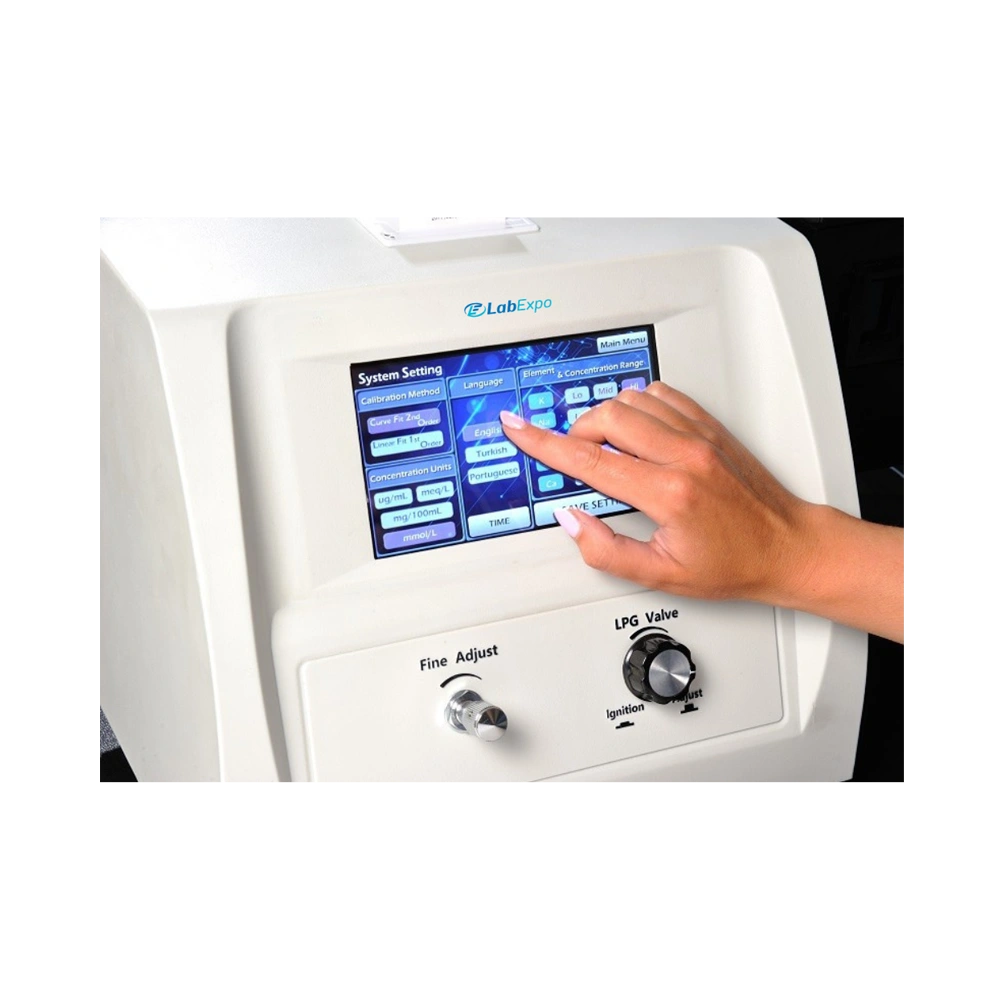
Easy to Use: Simple calibration with standard solutions, and some models have touch screens or built-in printers.
Handles Multiple Elements: Most models can measure two or more elements at once, like sodium and potassium together.
Accurate and Repeatable: Results stay consistent even across multiple samples.
Parts of a Flame Photometer
Nebulizer (Sample Sprayer)
This part turns the liquid sample into a mist so it can enter the flame evenly.
Flame Burner
A steady flame, usually powered by gases like acetylene or propane, is used to excite the metal atoms in the sample. The type of flame depends on what metals are being tested.
Optics (Light Filters and Lens)
Once the metal atoms glow, the instrument uses filters or special mirrors to isolate just the light colour (wavelength) we care about.
Detector
The light hits a sensor that turns it into an electric signal, which is then shown on a screen. This tells us how much of the metal is in the sample.Calibration
Before testing real samples, the device is adjusted using standard solutions (known metal concentrations). This ensures accurate readings.
Where it is Used
Flame photometers are a perfect fit for:
Medical labs: Monitoring sodium or potassium levels in blood.
Farms and soil labs: Checking fertilizers and soil nutrients.
Food and beverage industry: Ensuring correct mineral content.
Chemical and glass production: Quality control during manufacturing.
Schools and universities: Teaching basic analytical chemistry.
Final Thoughts
Flame photometry might not be the flashiest tool in the lab, but it is a powerful and practical one. For anyone needing to test for metals like sodium, potassium, calcium, or lithium especially in liquids like blood, water, or medicine, it is a fast and affordable choice. While there are some limits to what it can do, with proper training and calibration, it delivers reliable results. It is fast, affordable, and perfect for busy labs that need results quickly without complicated equipment. Equipped with safety and automation features, it is a practical tool for everyday testing in science, health, and industry. In short, it brings reliable performance without the high cost or complexity of more advanced machines.
How Lab Expo Can Help
At Lab Expo we offer high precision Flame Photometer designed for accurate and reliable detection of alkali and alkaline earth metals in various samples. Below is the essential technical feature of Lab Expo Flame Photometer-
Sample Intake (Aspiration Rate): It pulls in the liquid sample at a smooth pace of 5 to 6 mL per minute, which helps maintain a stable flame and ensures dependable test results.
Clean Air Supply Needed: The device needs clean, dry, oil-free air to run properly and keep its parts in good shape.
Quick Response Time: You will get your readings in just about 10 seconds after feeding the sample. This is ideal for fast-paced lab work.
Consistent Results (Repeatability): When you test the same sample multiple times, the variation is very small that is less than ±2%, so your results are always reliable.
Measurement Range:
Sodium (Na): Up to 160 ppm
Potassium (K): Up to 100 ppm
Sensitivity: This device can detect even very small amounts, down to 0.2 ppm for both sodium and potassium, which is great for analysing low-concentration samples.
Easy Calibration: It uses a multi-point calibration, which means it can be set up to read different concentration levels accurately.
Clear Digital Display: Results are shown on a bright digital screen, so they’re easy to read and understand.
Flame Operation: Uses a safe and steady LPG (liquefied petroleum gas) mixed with air to create the flame needed for the test.
Power Requirements: Runs on standard 220V AC power, which is commonly available in labs.
With built-in safety and automation features, it is a practical tool for everyday testing in science, health, and industry. In short, it brings reliable performance without the high cost or complexity of more advanced machines.